As you age, you likely notice changes to your body as a normal sign of aging. However, these changes, like a weakened pelvic floor, might be affecting your confidence and comfort.
The muscles in your pelvic floor should do their jobs automatically. But when we age, this can change, and many people don’t realize the importance of these muscles until they face incontinence, poor core strength, or decreased sensitivity.
At the Dermatology Center of McKinney, we can strengthen the muscles in the pelvic floor using noninvasive methods. With our pelvic floor therapy in McKinney, we help patients reclaim control over their intimate concerns.
Keep reading to explore:
An Overview of the Pelvic Floor
The 14 muscles in the pelvic floor stretch from the pubic bone to the tailbone, forming a sheet of muscle that protects the organs in your pelvis. In addition, these muscles work together to give you control over various functions in your day-to-day life.
Healthy pelvic floor muscles:
- Keep your pelvic organs in place. The sheet of muscle protects the bowel, bladder, urethra, and more. In women, the pelvic floor supports the vagina and uterus, and in men, the muscles support the prostate.
- Control when you release waste. This also means you can cough, sneeze, jump, or laugh without experiencing bladder leaks.
- Provide support to your core and enhance posture. The pelvic floor muscles make up the base of your core, which supports your back, abdominal muscles, and diaphragm.
- Support sexual functions, including vaginal muscle contractions, erections, and orgasm.
When pelvic floor muscles weaken from pregnancy, menopause, natural aging, or trauma to the pelvis, you might lose control of these important functions (pelvic floor dysfunction).
What Is Pelvic Floor Dysfunction?
When you lose the ability to control the pelvic floor muscles, you might find yourself constantly looking for the nearest bathroom or experiencing unwanted bladder leaks (urinary incontinence). One of the most common signs of this pelvic floor issue can affect physical and mental well-being.
Additionally, if you have weakened pelvic floor muscles, you might experience lower back pain, poor posture, or loss of sexual sensation. Individuals can also experience pain and ongoing discomfort when using the bathroom or during sex.
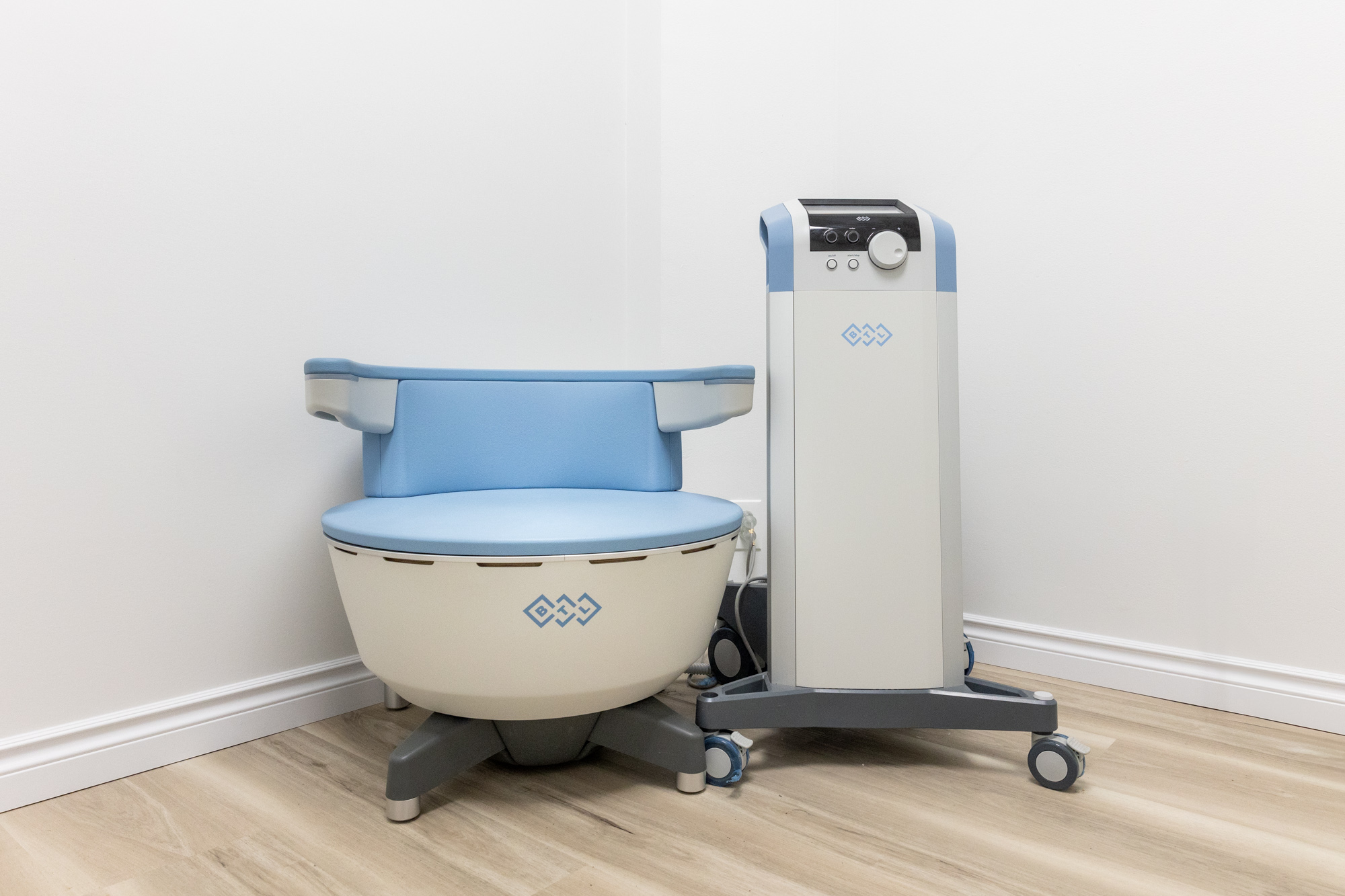
Pelvic floor therapy in McKinney helps patients who suffer from urinary incontinence and pelvic pain by strengthening the pelvic floor. We use the Emsella chair, a noninvasive device, to enhance your pelvic health, improving your quality of life. Let’s take a closer look at how this device works.

Emsella Explained: How Pelvic Floor Therapy Works
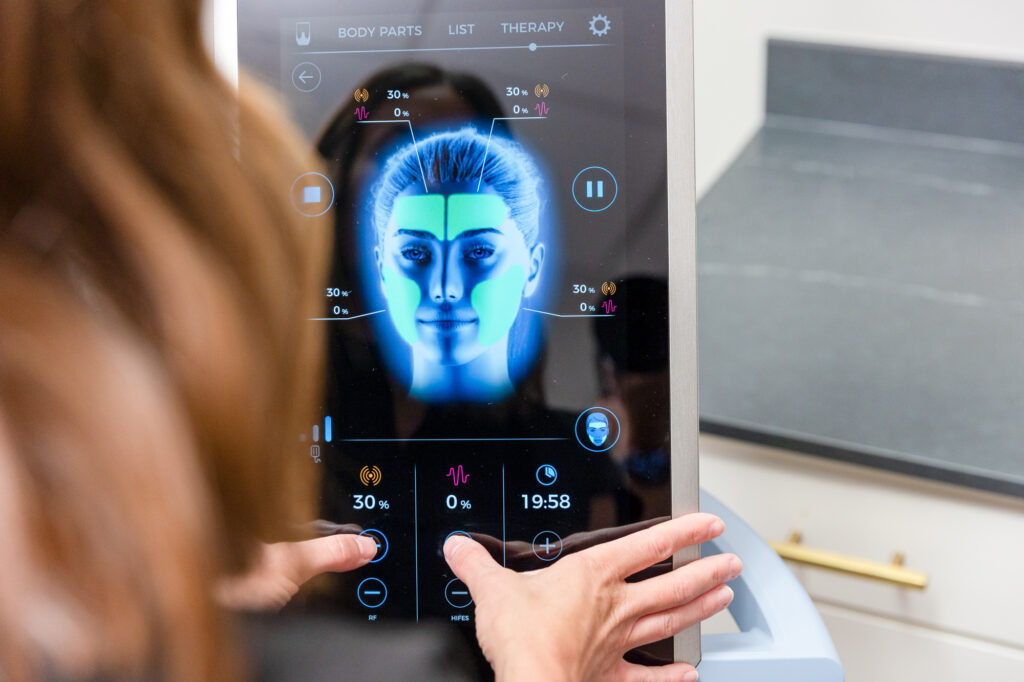
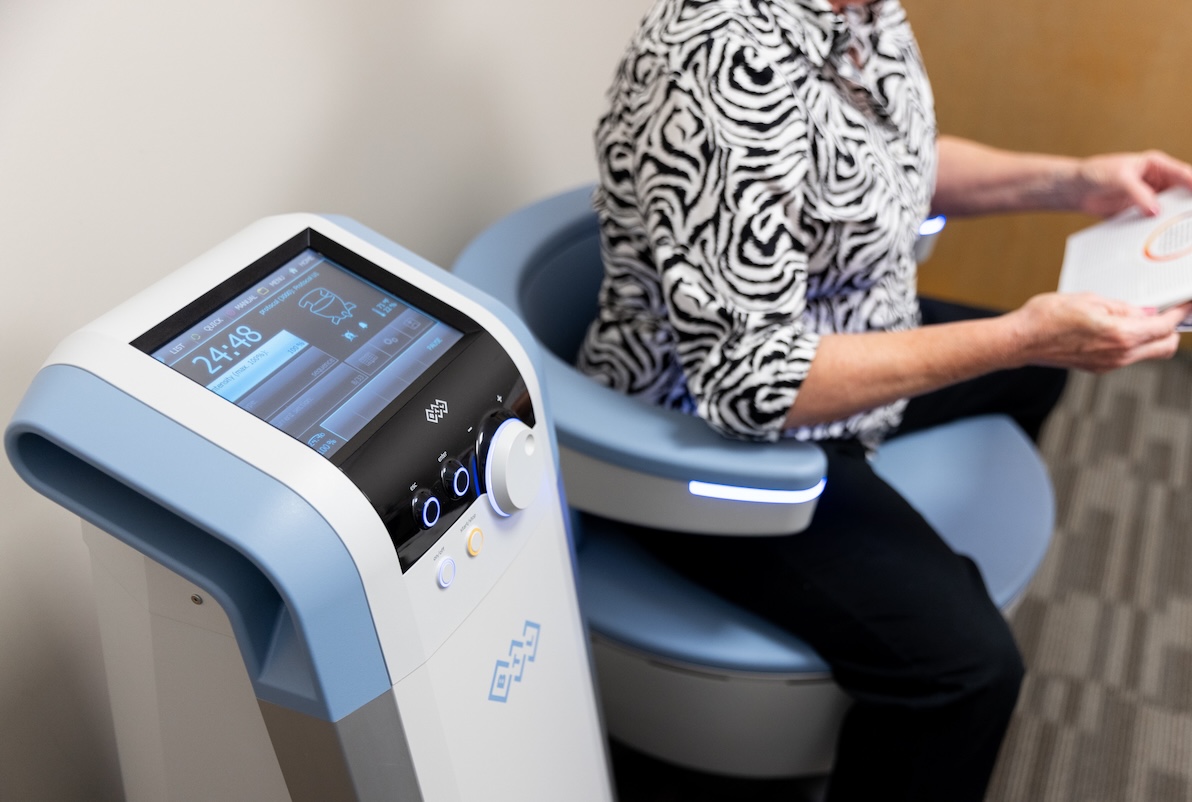
At the Dermatology Center of McKinney, Dr. Ralston and his team help patients live more comfortable lives with Emsella pelvic floor therapy. This advanced device uses high-intensity focused electromagnetic (HIFEM) energy to target the muscles in the pelvic floor.
As you sit on the Emsella chair, the HIFEM energy is emitted upward, stimulating rapid muscle contractions. These intense contractions resemble Kegel exercises, but are much more intense. During your session, your pelvic muscles can contract around 12,000 times, giving you more bodily control and strength.
Research suggests that HIFEM energy significantly reduces urinary incontinence, stops bladder leaks, and enhances pelvic integrity. By using Emsella, patients can explore a wide range of benefits, allowing them to have more control over intimate concerns.
Our Process for Emsella
When you choose our practice for pelvic floor therapy in McKinney, we approach your treatment with respect and understanding. Urinary incontinence and intimate wellness concerns can take a toll on your confidence and well-being, so we help you through the process by personalizing your treatment and helping you reach your goals.
Step 1: Your Consultation With Dr. Ralston
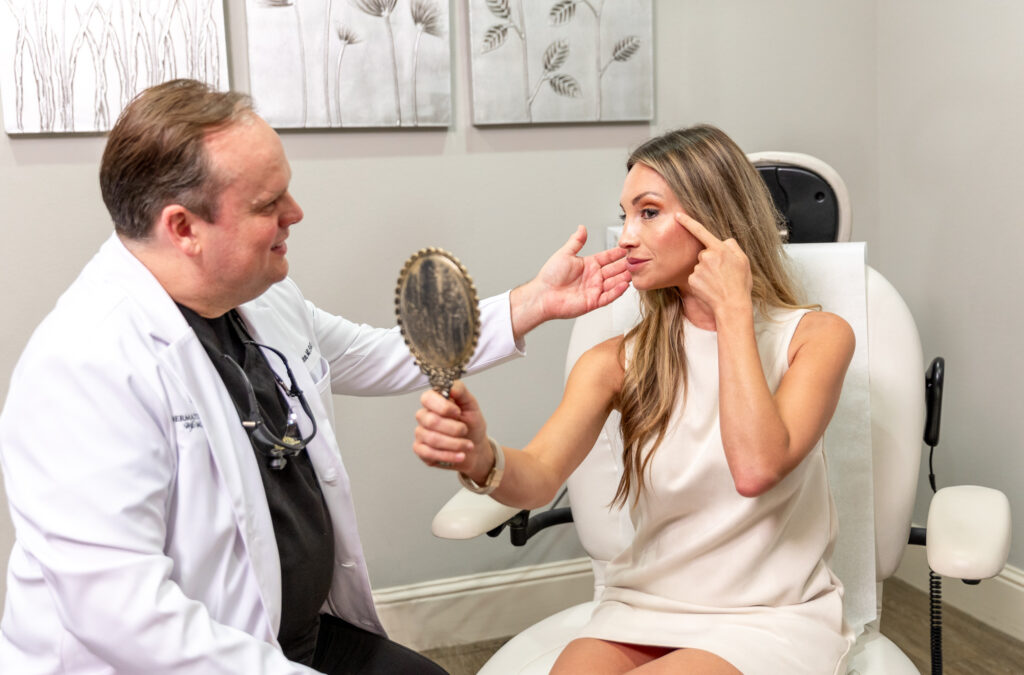
The first step of treatment is a personalized consultation. We want you to feel the most comfortable going into treatment, which is why we have you speak with Dr. Ralston beforehand. During this conversation, we discuss your concerns and struggles, goals for Emsella, and give you the opportunity to ask any questions.
Dr. Ralston asks about your present health to confirm your candidacy for treatment, including:
- Pregnancy or breastfeeding
- Metal or electronic implants
- Active skin conditions
- Recent hospitalizations
- Tumors or drug pumps
- Cardiovascular disease
Once Dr. Ralston confirms that Emsella could help you achieve your wellness goals, we schedule your appointments for pelvic floor therapy in McKinney.
Step 2: Preparing for Emsella
While much of the preparation for Emsella treatment happens during your consultation, we do ask that you follow a few instructions before your appointment.
- Arrive at our practice wearing light, comfortable clothing. Don’t wear pants with heavy fabrics, as they might interfere with the HIFEM energy.
- Remove all metal and electronics, including piercings and cellular devices.
- Moderate fluid intake, as drinking too much water could worsen urinary incontinence.
- Don’t drink coffee, tea, or carbonated beverages that could irritate the bladder.
- Stop smoking, as a smoker’s cough puts excess pressure on the bladder, worsening bladder control.
Step 3: Emsella Treatments
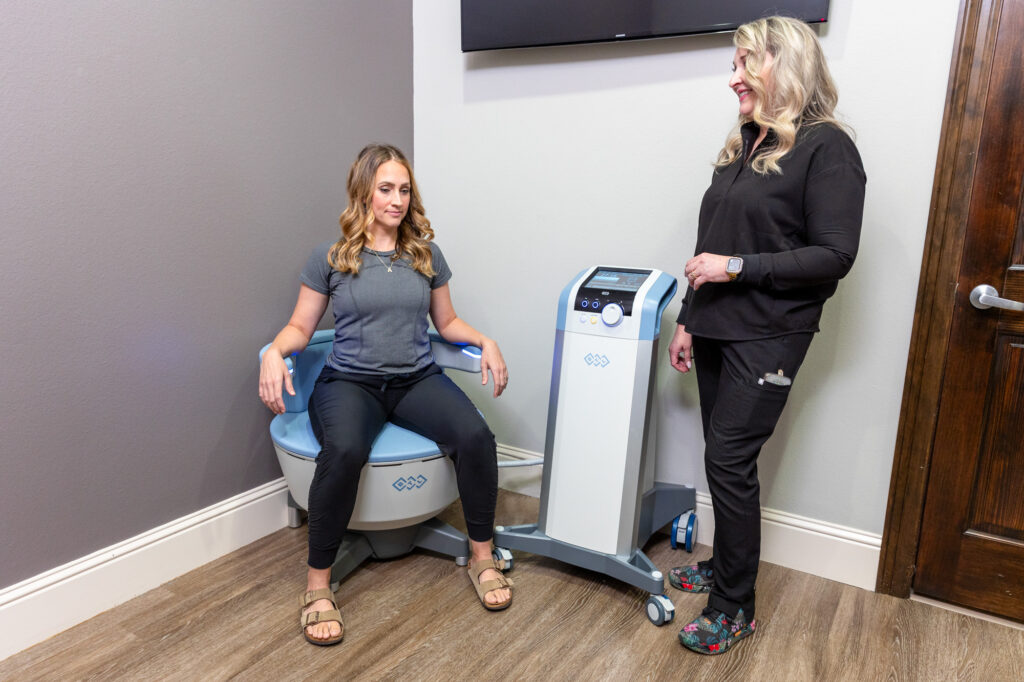
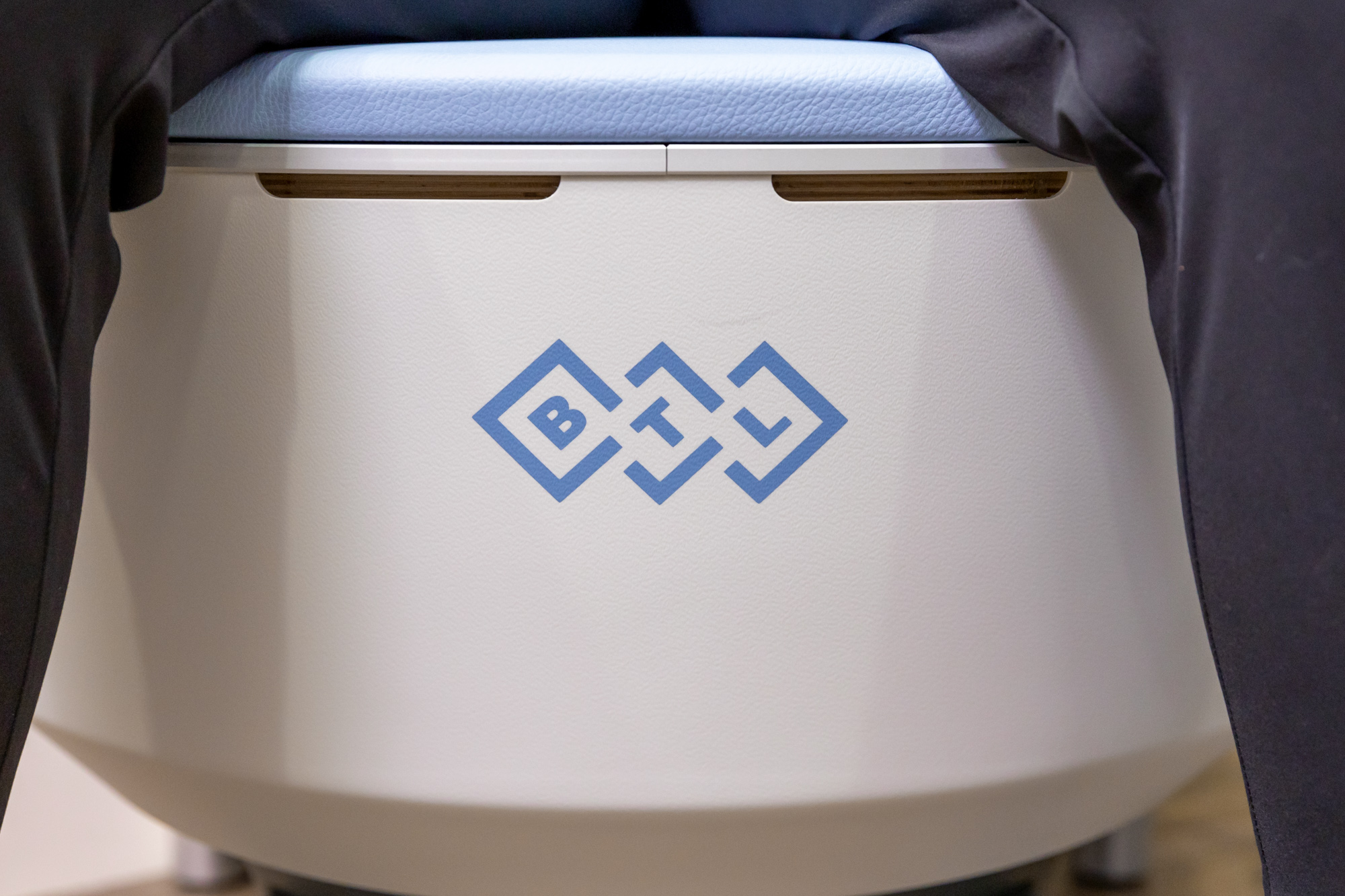
When you arrive for your Emsella treatments, we have you sit fully clothed on the chair. There’s no need to undress, making Emsella a comfortable and discreet approach to pelvic floor health.
Each session of Emsella takes around 30 minutes, during which your pelvic floor builds and strengthens muscle fibers. Dr. Ralston typically recommends a series of 6 appointments to fully activate and enhance the pelvic floor.
Step 4: Post-Emsella Care
After each appointment, you have a brief check-in with Dr. Ralston. He asks how you feel after treatment and takes note of the results. He also helps you schedule any additional treatments.
Emsella requires no downtime, meaning you can return to your schedule as you wish. After your appointment, Dr. Ralston gives you a few instructions to enhance the results of pelvic floor therapy in McKinney, such as:
- Maintain consistent pelvic floor exercise, such as Kegels. Typically, we recommend doing 10 Kegels in the morning and 10 at night.
- Eat a nutrient-rich diet. Dr. Ralston recommends eggs, walnuts, legumes, quinoa, and salmon.
- Encourage muscle fiber growth by hydrating and drinking enough water.
Step 5: Enjoy a Stronger Pelvic Floor
As you reach the end of your treatment series, you can begin to experience the power of a strong pelvic floor. After you finish the recommended number of appointments, you can enjoy the results for up to 6 months or longer.
To keep up with the results and continue to strengthen the pelvic floor, Dr. Ralston recommends Kegel exercises and maintenance appointments. If you find that after 6 months you experience more bladder leaks or frequent trips to the bathroom, come see us for another session of pelvic floor therapy in McKinney. We can enhance the pelvic muscles further to keep up with your body’s needs, while improving your comfort.
Commonly Asked Questions About Pelvic Floor Therapy
Now that you understand our process, let’s answer questions we commonly hear about Emsella and the pelvic floor. Patient education is one of our core values, which is why we want you to have all of the information you need before booking your appointment.
Can men receive pelvic floor therapy with Emsella?
Yes. Although urinary incontinence is more common in women, men can benefit from Emsella as well. Emsella has the potential to improve men’s sexual function and bladder control concerns.
For male patients, Emsella can:
- Improve erectile dysfunction and enhance sexual performance.
- Reduce urinary incontinence, especially for men who suffer from prostate issues.
- Provide ejaculation control and enhance sexual pleasure.
Does Emsella only treat urinary incontinence?
No, the Emsella chair can treat many side effects of pelvic floor dysfunction, not just urinary incontinence. By activating the pelvic floor and restoring the muscles to a healthy position, patients can experience more comfort and improved mobility through enhanced posture and core strength.
For women, Emsella can tighten the vaginal canal and enhance blood flow, increasing natural lubrication and sensitivity. For men, increased circulation can improve sexual function and erections.
What does Emsella feel like?
Once we begin treatment, you might feel a tingling sensation and rapid muscle contractions. These are signs that the pelvic floor chair is working as intended. If you experience discomfort, Dr. Ralston can adjust the intensity of the HIFEM energy, as the treatment should not be painful. Your pelvic floor therapy in McKinney is designed with comfort in mind, as the treatment provides a noninvasive and convenient solution to pelvic floor concerns.
Explore Life Without Limitation
At the Dermatology Center of McKinney, we help patients live without the embarrassment of bladder leaks by providing pelvic floor therapy in McKinney. With noninvasive energy, we can help strengthen the pelvic floor muscles, allowing you to live life more confidently.
Schedule your appointment with Dr. Ralston to explore how Emsella can benefit you.
Curious about our other treatments? Read our blog where we give you insight into hair restoration, B12 shots, and more.